End of Summer Special: One-on-One Personal Training 3 Sessions $97
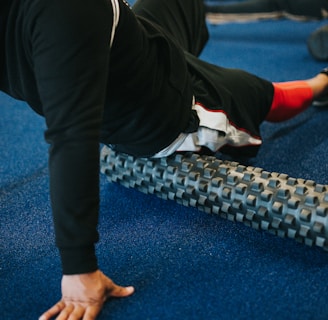
Using myofascial release techniques
How to effectively use myofascial release techniques with a foam roller.
Dara Moore
6/5/20231 min read
Myofascial release techniques have become popular and for good reason -- they work! As I have studied myofascial release and use it regularly I encourage others to try this self-massage technique to help muscles recover. The idea of myofascial technique is to use a foam roller to find a tense part of a muscle, a spot that has discomfort (not tender) when rolling over it. Then stay on that spot for 30 seconds to 2 minutes with a moderate pressure until you feel the tension dissipate some. Then move on to a new spot. This is not a miracle cure for muscle tension. It will not take a tense muscle and make it relaxed with one roll of the foam roller. It is a process that if incorporated into your weekly routine will help your sore muscles and your performance. This technique is also useful as you warm-up muscles and prepare for your workout. It has been shown in research that foam rolling decreases DOMS (delayed onset muscle fatigue) if performed prior to working out. This is an excellent practice to put into your routine. A few minutes before working out pull out the foam roller, use it on the muscles you expect to use during your workout and experience a better workout and a faster recovery.
No content on this site, regardless of date, should ever be used as a substitute for direct medical advice from your doctor or other qualified clinician.

Contact
support@morefitlife.com
More Fit Life, LLC
The information provided on a website is intended for educational and informational purposes only and should not be construed as legal, financial, medical, or professional advice. Users are advised to seek guidance from qualified professionals in their respective fields before making decisions based on the content. The website owner disclaims any liability for actions taken or not taken based on the information provided, emphasizing that results may vary and no guarantees are made regarding specific outcomes. The content is not a substitute for professional advice and must not be used for diagnosing or treating health problems.
Users are responsible for their own decisions and assume all risks associated with using the information, including potential harm, injury, or financial loss.
The website may contain links to third-party content, which are provided for convenience and do not constitute an endorsement or guarantee of accuracy.
The website owner makes no warranties, express or implied, regarding the accuracy, completeness, or suitability of the information, and disclaims all liability for errors, omissions, or damages.
No content on this site, regardless of date, should ever be used as a substitute for direct medical advice from your doctor or other qualified clinician.